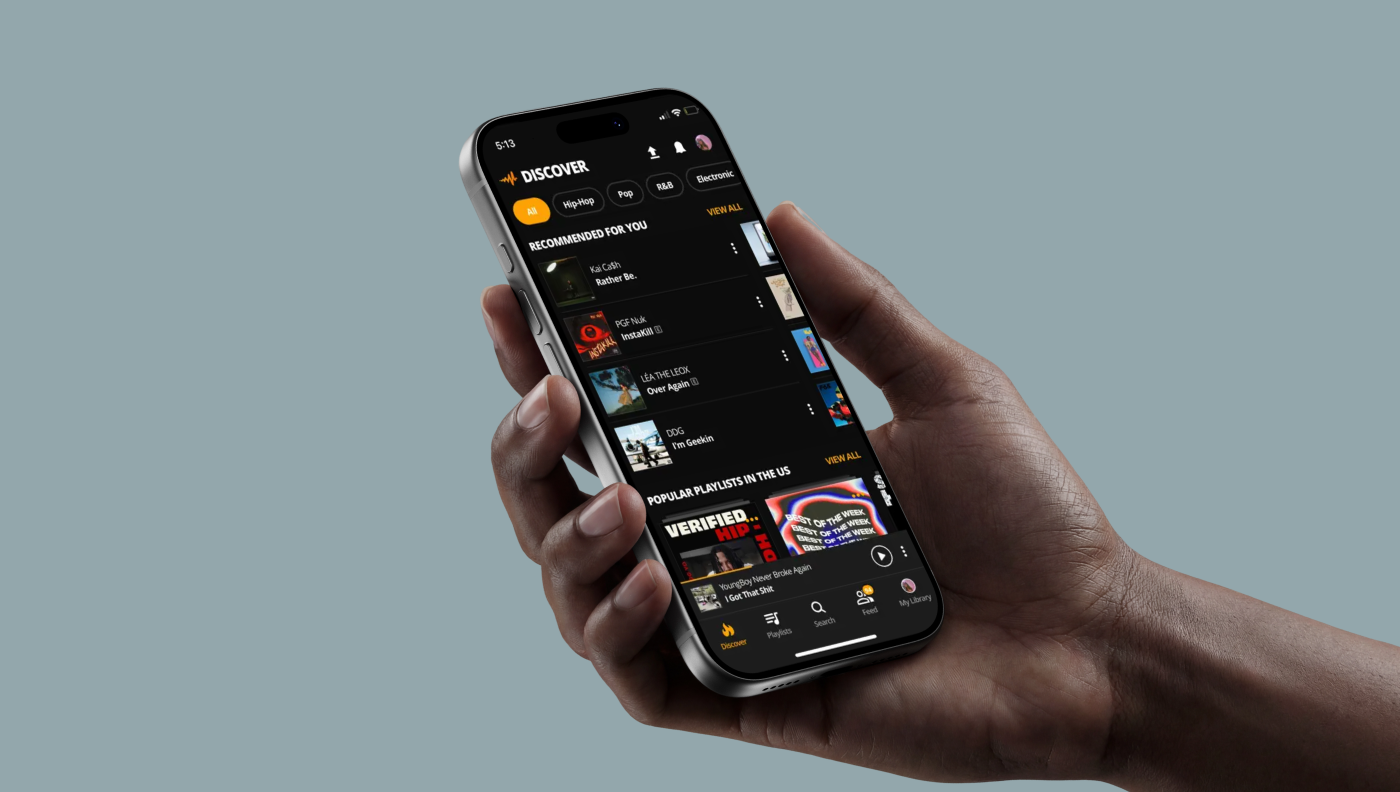
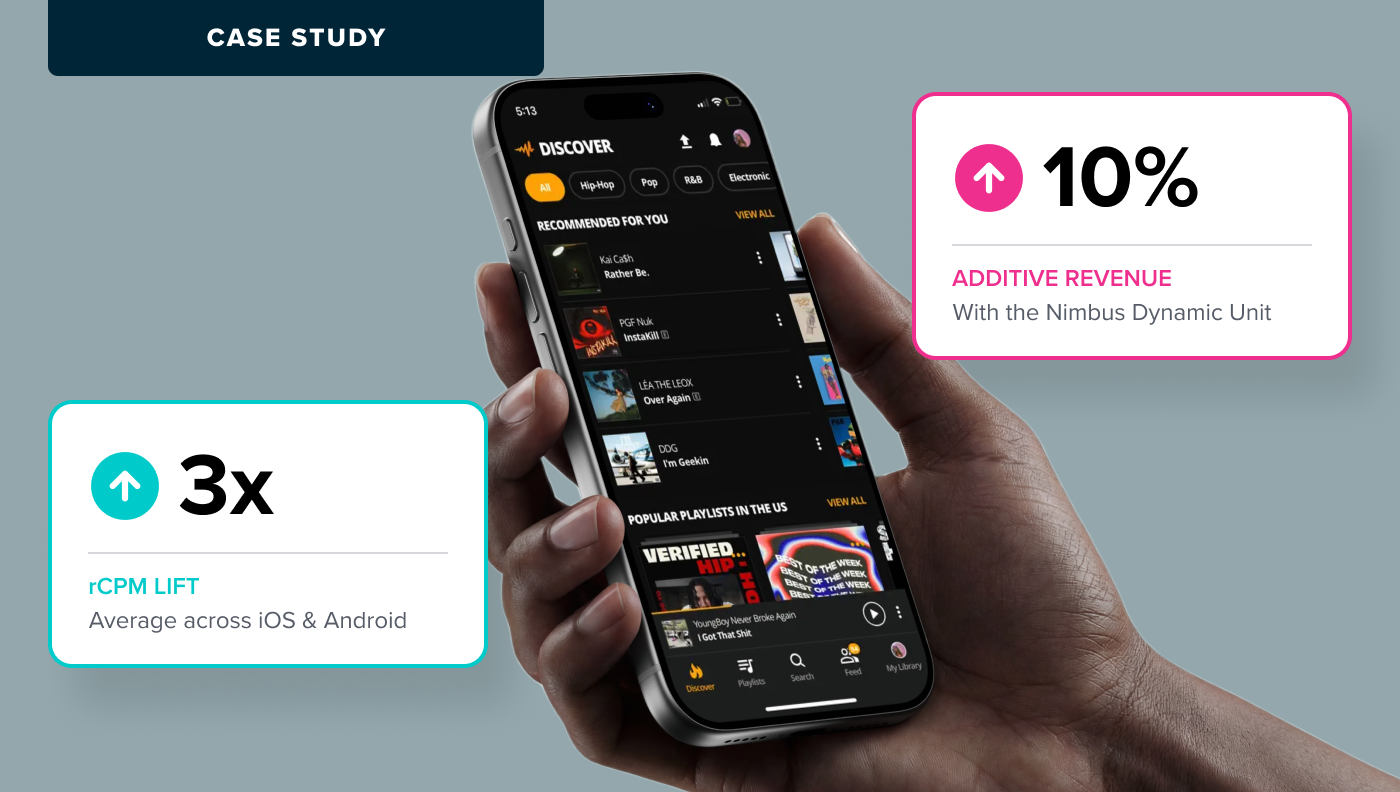

Audiomack partnered with Nimbus to monetize placements its standard formats couldn’t serve. The Nimbus Dynamic Unit now drives roughly 10% of Audiomack’s overall ad revenue — without adding ad load or interrupting the listening experience.
Audiomack is a music streaming and discovery platform where artists upload directly and fans listen free. Its audience is global in a way few apps can claim. In the first half of 2026, more than half of Audiomack’s ad impressions came from Africa, with North America, Latin America, and Europe making up most of the rest. That reach is a strength for the platform and a challenge for monetization, because much of the audience sits in regions where programmatic demand runs thin.
Audiomack’s standard formats already had a mediation home. Interstitial, rewarded, and banner were covered. The open question was the listening experience itself. Sessions are long and continuous, and an ad that interrupts the session costs the platform the very engagement it monetizes. Off-the-shelf units were never built for that environment: they assume they own the screen, they demand a fixed shape, and they render whatever the demand partner sends. Inside a listening session, that approach trades retention for revenue. For a platform whose value compounds the longer a fan stays, that is a bad trade.
The conventional alternative, native programmatic demand, has its own problem: scarcity. Demand built for native formats is spotty in even the deepest ad markets, and what exists rarely bids at the levels static and video demand can reach. Audiomack’s global footprint compounds the problem. Native demand concentrates in a handful of major markets, and much of Audiomack’s audience listens from outside them. A custom unit that could only accept native demand would sit close to empty. Publishers who design custom units usually pay for that freedom with a thin auction, and Audiomack would have paid more than most.
Audiomack wanted both — placements that belong to its UX, filled by the deepest end of the demand pool.
Audiomack works with Nimbus to monetize exclusive placements built on the Dynamic Unit, Nimbus’ proprietary ad format, alongside the stack that serves its standard formats. Nimbus wasn’t brought in to replace what worked — it was brought in to monetize what nothing else could serve. The Dynamic Unit lets a publisher design the container — size, shape, behavior, controls — while Nimbus opens the auction behind it to interstitial, static, and video demand rather than limiting it to native programmatic. When a bid wins, Nimbus rendering fits the creative to Audiomack’s container automatically: scaling, letterboxing, adapting, without Audiomack touching each creative.
The result is a placement that reads as part of the product and clears at the CPMs of the formats buyers spend on.
Behind the unit sits Nimbus Mediation and its unified auction — a single server-side auction where 45+ core demand partners and the Nimbus+ marketplace compete on every request. That demand breadth is the other half of the story: high-paying creatives can only preserve a user experience if they show up to bid in the first place, and much of this demand isn’t reachable through conventional mediation solutions.
Nimbus’ proprietary request filtering also focuses demand partners on the opportunities most likely to convert. This efficiency dropped request volume by 36% year-over-year while increasing revenue by 86% in this unit.
The headline number is the simplest one: Nimbus now drives roughly 10% of Audiomack’s overall ad revenue. Because the Dynamic Unit monetizes placements standard formats can’t serve, that isn’t revenue shifted from one vendor to another — it’s revenue that wouldn’t be available without it.
Audiomack unlocked what seemed like an impossible monetization opportunity with Nimbus. Every point of growth came from the value of each impression (better demand competition, better fill, better rendering) rather than from showing listeners more ads. For a session-based product, that distinction is the whole game: revenue that grows while the listening experience holds steady supports the retention and lifetime value the platform is built on.